
Web design services
Our Web design principles
- Web design should be clean, concise and clearly reflect the owner's brand and message.
- Design is not an end in itself, but rather should provide a backdrop of credibility to site's message and value propositions.
- Graphic design's primary purpose is to serve as catalyst for communication.
- Layout and site structure must be intuitive to use and clear in the function they serve.
- Design should be based on the way visitors actually use a site, not how we think they should.
- Because most people skim sites, the most effective websites offer fewer, well-chosen visual elements and decision points.
- Less is more. The most successful design is achieved by the cumulative effect from attention to small details.
- Each visual element must justify its existence by specifically defining how it supports a site's goal.
The visual design and layout of your website is itself the first message you give to visitors. Although this message is conveyed in seconds, and processed subconsciously by your visitors, it's a loud and clear declaration of the credibility, quality and potential value you are offering to them. For more insight on the principles we use when designing websites, visit Stanford University's Persuasive Tech Lab.
Instant credibility
In a matter of seconds, visitors to your site answer two questions that determine if they stay or leave:
- Can I trust the information on this site?
- Can I trust in the services this site describes?
What do they rely on to answer these questions? Stanford's research shows that people are most likely to base their decisions on a site's design/look, information design/structure and information focus.
A quality design by itself will not accomplish anything of course, but it's vital for gaining the trust of your visitors long enough to prove to them that the credibility they perceive from your presentation is legitimate.
Sustained credibility
Quality design is vital for getting visitors attention, but it also plays an a more important role of reinforcing that credibility and diffusing objections throughout the entire sales process of your site for both prospects and relationship clients. A site's graphic design should not dominate a visitor's attention, but rather it should serve as a backdrop of credibility that directs attention to and reinforces your messages.
Goal oriented design
Presenting your new visitors with a credible visual design gets their attention for a moment. The design then serves as a delivery mechanism to provide them with information that is easy to understand, succinctly addresses their needs, and progresses them towards a solution.
The seven stage sales cycle
For new visitors, your website must clearly and concisely answers these seven key questions:
- Who are you and what do you do?
- What specific needs do you meet?
- Why are you the best choice?
- Where can I get more information?
- Where can I verify your claims?
- How can I try your product?
- How can I become your customer?
The answers you provide for these seven questions define your sales or communication cycle and should serve as a blueprint for the sections of your site. Each bit of supporting content within those sections and pages must reinforce that particular sales cycle stage and provide a clear and smooth transition to the next stage until closure.
Relationship cultivation
The most valuable users of your site will be your current customer base and stake-holders. Goal-oriented site sections catering to this group allow you to leverage their already established trust and loyalty to better meet their needs, increase profitability, and decrease your overall messaging cost. The involvement of this high-value group of users also directly contributes to the effectiveness of the seven-stage sales cycle for new customers.
Relationship cultivation users' needs may vary by scenario, but here are some common questions:
- Where do I go for support and resources?
- What other products can I buy from you?
- I love your product, how can I share my experience and insight with others?
- How can you encourage and help me to tell others about your product?
- I've got feedback about your products, how can I tell you?
- How do I invest in your company?
- How do I work for your company?
Why you'll love our websites

1. They're modern, versatile & scalable
The sites we develop are as far away from proprietary as you can get. We'll create a rock solid web foundation for your company using an HTML framework that allows virtually unlimited expansion and application integration. Also, we're always here to provide ongoing service and support as your business grows.

2. You'll look great
Stanford University reports that 46% of visitors to your site will judge your credibility based on the visual design. Our experienced design professionals can provide any organization the credibility they deserve. see our portfolio

3. More people will hear your message
We develop sites that cater to the broad spectrum of modern users including PC, Mac, iPad, Android and iPhone platforms. We can also expand your Web presence to include dynamic broadcast technologies like social media, blogs, and RSS to push your message to the world so you'll get noticed by more potential customers.

4. They're OPTIMIZED for exposure
We use best practice search engine optimization when we develop your site, and we provide expert guidance and advice for utilizing SEO as a part of your comprehensive marketing plan. We can help you find the perfect top-tier SEO and marketing experts to help you achieve your goals. We love giving our customers honest, objective advice and we're sticklers about helping them find the right (and legitimate) marketing or SEO resource for their goals. Contact us for more information and check out our many articles and resources on search engine optimization.

5. They can grow with you
Our websites are developed using non-proprietary, open source code that is designed specifically for growth, adaptability, and integration with other applications—making your website one of the most scalable and versatile Web platforms available.
6. We listened to smart people
 We adhere to the
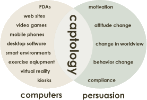
best practice principles of captology and usability so the website we build for you will more effectively influence what people believe about you and how they react to your message.
We adhere to the
best practice principles of captology and usability so the website we build for you will more effectively influence what people believe about you and how they react to your message.
Learn about captology | Stanford Persuasive Technology Lab 
Learn
about usability | Steve Krug's Advanced Common Sense

7. Geeks can't hold you hostage
Have you had someone purposely make your website seem overly complicated and mysterious to ensure their own job security? We love simplifying the complexities of the web, and because our websites are based on modern non-proprietary code, they allow you as the owner to choose between many qualified developers.
8. You're protected from the unknown
We provide best practice back-up and disaster-recovery services. This safeguard allows quick recovery from any mishap—whether minor or worst-case-scenario.

9. There's lots of help
We're a service company. Our number one priority is proving fast, service to our customers whenever they need it and/or helping them find the right support resources for their existing web assets.

10. Our sites empower business leaders
Do you have a unique product, service or message that the world needs to know about? Having the best of something means nothing unless others know too. If you've got the goods, let us help you build a platform where that message can be presented in the most credible and far-reaching manner possible.

11. Risingline was founded by marketing guys
No really, this is a good thing. Not that there's anything wrong with programmers, but what do they really know about growing a business? We build sites from a strategic perspective and utilize cutting-edge technology as tools to achieve your business goals.

12. They're reliable, compliant, and safe
We develop websites using industry best practices and are sticklers about ensuring your code is error free and properly functioning on all platforms. We specialize in professionally managed websites which provide the best protection against hackers and the fastest page load times. We advocate producing sites which are legally compliant for disabled accessibility using WCAG 2.1 AA (Section 508) standards.